The football (“soccer” in the U.S.) World Cup should be one of humanity’s great celebrations. For a month, people from every continent follow the same matches, argue about the same questionable referee calls, share the joy of victory and heartbreak of defeat. Football is played everywhere in the world, and by everyone from kids in schoolyards to professionals in stadiums. Few things bring together as many people as the World Cup.
Yet as this 2026 tournament begins, it is hard to ignore the fact that an event that is supposed to unite the world has been mostly defined by exclusion.
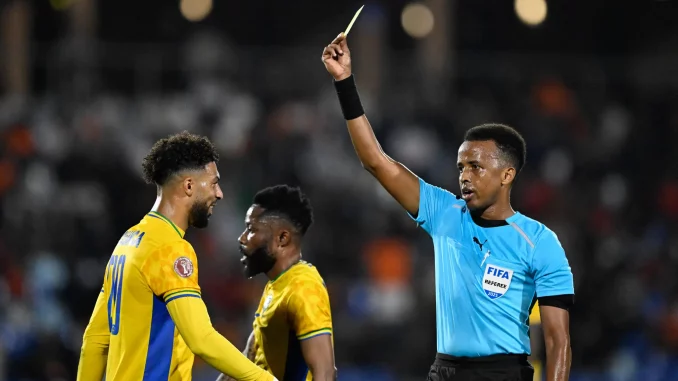
Fans from many countries have faced enormous obstacles to attend. Travel restrictions and visa denials have become a familiar part of this World Cup. One of the clearest examples was Somali referee Omar Artan, who had been selected to officiate at the tournament but was denied entry to the United States. A World Cup referee was prevented from attending the World Cup. And, because Iran did not surrender when the U.S. and Israel launched a war against it three months ago, the U.S. postponed issuing visas for Iran’s athletes, coaches, and support staff. Although most of those visas were finally granted, some support staff were left off the list. Iran was forced to move its World Cup team training facility during the tournament from the U.S. to Mexico. The U.S. government also at the last minute forced FIFA (Fédération Internationale de Football Association or International Federation of Association Football) to eliminate Iran’s quota of tickets for the matches. You can’t make this stuff up!
Even beyond immigration policy, trying to attend a single match of the tournament has become virtually inaccessible to ordinary fans. Ticket prices have reached levels that are out of reach for working-class people. What should be a celebration open to everyone is now treated as a luxury product.
This logic of profit reaches into every corner of the tournament. FIFA uses a dynamic pricing system, which allows ticket prices to rise with demand. But it does not stop there. Even measures introduced to protect players from extreme heat have become opportunities for broadcasters and sponsors. Hydration breaks are now accompanied by additional advertising. Wherever there is a crowd or a television audience, someone is looking for a way to make money from it.
And it is not only fans who bear the costs. Workers have raised concerns about labor conditions. Host cities and governments spend enormous sums on infrastructure, transportation, and security while FIFA collects the profits. Once again, the benefits are concentrated while the costs are spread across the public.
None of this is new. If you have a modest love and knowledge for the game, you know the fame of corruption FIFA carries. Also, governments have long used this tournament for political purposes. Fascist Italy used the 1934 World Cup to promote Mussolini’s regime. In 1978 Argentina’s military dictatorship used it to whitewash its brutal “Dirty War” of the 1970s and 1980s. More recently, Russia and Qatar used the World Cup to try to project a positive image to the world.
But something seems to have changed in 2026.
Previous hosts generally wanted the tournament to make them look welcoming and open. They wanted the world to see modern stadiums and a friendly atmosphere, even when repression, exploitation, and inequality existed behind the scenes. The spectacle was meant to distract from those realities.
This World Cup feels different. The masks are off. The exclusions and restrictions are visible. There is less effort to disguise the profiteering, and the message increasingly seems to be: these are the rules, accept them. Fans are openly told to accept rising prices. Travel restrictions are treated as normal, and harsh security measures are presented as common sense.
All of this shows not only the long-time commercialization of football, but also a political climate where the ruling class does not think it necessary to justify itself and feels comfortable simply imposing its conditions.
Despite all of this, it is hard to look away. Because for many of us, football is not just a product, it is a game we learned from our parents and played as children with our friends and neighbors. It carries memories, and a sense of connection that cannot be reduced to ticket prices or television contracts. Billions of people still care because they feel that football belongs to them. But a tournament organized under a system driven by profit and power cannot escape the logic of that system. That is why even one of humanity’s greatest celebrations ends up reflecting a world marked by borders, exclusion, and inequality.