All over the U.S., construction of AI data centers is breaking ground, often taking locals by surprise. These projects raise concerns about air and noise pollution, as well as excessive water and energy consumption leading to rising utilities bills and overloading already stressed infrastructure. And, as with most undesirable industrial developments, data centers are often pushed into low-income communities that lack the resources to fight back or to deal with the negative impacts when they come.
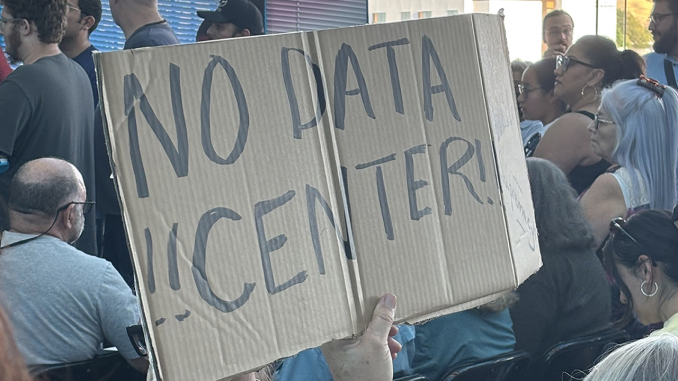
In and around the San Francisco Bay Area, there are several data center builds facing push back from local residents, including in Pittsburg and Gilroy. The Pittsburg project was approved by city council in 2024, but many residents have only learned about it in recent weeks. This revelation has brought up questions about the lack of outreach from city council at any point to hear residents’ opinions on the proposal. Some are asking for a 2-year moratorium on the build and the creation of a citizen oversight committee.
Elsewhere, the company Global Stack LLC has proposed building dozens of data centers throughout California on state fairgrounds, a pitch that preys on these venues’ unstable income sources due to the short term and seasonal nature of the events they typically host. But who wants to go to a fair where the whole event is polluted by noise from a data center?
Data centers may also become linked to California’s long-delayed high-speed rail system in order to subsidize funding, despite opposition from Central Valley residents and city governments. These cities signed up to be connected to the rest of the state, not to host infrastructure for tech companies with no connections to their communities.
The spread of these AI data center projects, with companies vying for more and more land to build facilities with more and more computing power, will continue to be a threat to all of our communities as long as the AI boom continues. Beyond that, under a system where having capital to invest bestows on corporations the power to shape infrastructure, this attack will come in new and varied forms over the years as technology develops. They will never consider the opinions of nearby residents or the consequences on their everyday lives. We, the people facing those consequences, will have to be the ones to fight back, not just to defend our rights, but to change the whole system. Our only chance to win is to recognize and unite our shared fight, across California, the U.S., and the world.