Reflections of a comrade from the Workers’ Pole on the current popular uprising
by Erica Layme
Originally published on June 6, 2026 by Prensa Obrera (translated from Spanish).
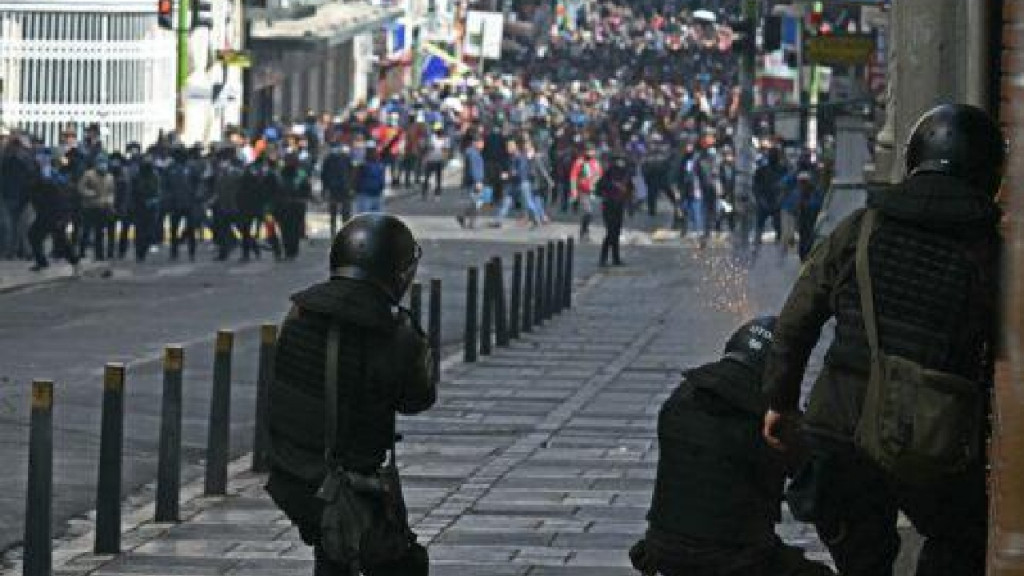
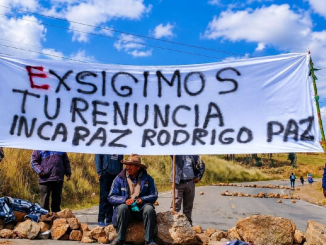
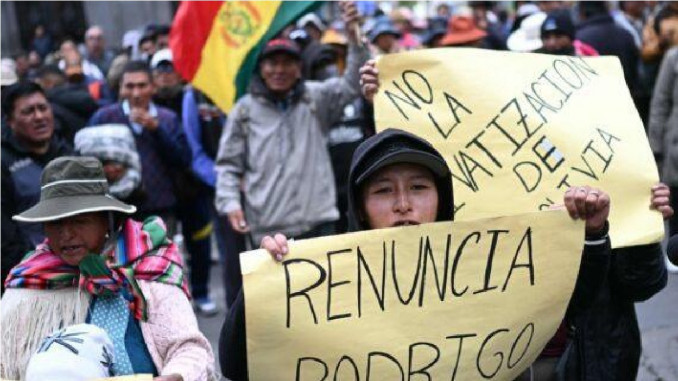
Today, as more than two centuries ago, a new cry for freedom is being born in Bolivia, in the department of La Paz. The same cry that echoed then and culminated in the declaration of independence fifteen years later, but not before witnessing its neighbors liberate themselves and gain their independence. Today, a revolutionary cry is born anew from workers, laborers, peasants, and students who take to the roads, crossroads, and streets, demanding their rights, protesting broken promises, deceitful campaigns, and abuses that the Bolivian people are no longer willing to accept. Today, Bolivia is the beacon. It is the sun-scorched, brown face, the shared coca leaves among community members as they take turns maintaining the blockades, which are both a challenge and a sacrifice because our people know that accepting the oppression of the elite only means hunger for their people, their children, and their grandchildren.
Today I read and hear from city dwellers and foreigners a discourse that, far from understanding how the Bolivian people are organized, only demonstrates ignorance and a lack of interest. To understand why the Bolivian people rise up and have this level of organization, we must first understand the daily life of the communities and neighborhoods of El Alto. As a resident of El Alto and the daughter of parents born in two different communities, I would like to share what I know.
In the neighborhoods of El Alto and surrounding areas of La Paz, weekly meetings are organized by neighborhood associations. These associations have representatives elected by a show of hands after being nominated by residents or volunteering. This process is repeated annually, and positions rotate. All members are encouraged to hold positions, and to ensure their opinions carry more weight, they should serve at least once in a role such as president, secretary of the various departments, or member-at-large. These meetings provide information on the political landscape, upcoming projects in the neighborhood, residents’ concerns regarding everyday issues, conflicts between neighbors, security, education, and recreation.
All voices are heard; there are often in-depth debates on various topics. Representatives from the parents’ association, the neighborhood school, and the market’s board of directors are always present. Teachers and administrators from different schools and health centers are also invited. These meetings typically incorporate into the political situation report the issues discussed at the expanded meetings of neighborhood councils throughout the city. The decisions made there are then put to a vote in the neighborhoods, after the topics have been discussed publicly, and the responses are taken to the larger, expanded meetings or multisectoral assemblies.
Each union and board, as decided by its members, votes in expanded meetings. Resolutions are then made public through press conferences or official statements, a practice repeated in school boards, markets, and student centers, both at the secondary and university levels. Like any system, it has some flaws, but for the most part, it is highly representative of the population and its way of thinking. Bolivian unions change their representatives every year; there are annual elections, generally by a show of hands, and they are maintained through a system of dues and fines for those who fail to participate in scheduled activities. There are regular accountability reports, and most unions divide the collected funds among all members. Delegates are always closely monitored because anyone at a meeting can demand an accounting.
From childhood, Bolivians know that neighborhood meetings take place in the town square on Sundays, that parents hold assemblies at school, and that vendors organize to participate in and support workers. We know that teachers demand fair wages and communicate their decisions to parent-teacher associations. We know that some parents are often upset, but that the majority support them. We are a poor country, and we need to organize ourselves if we don’t want our situation to worsen.
This became very clear, and we experienced it firsthand in October 2003, during the “Gas War” under the presidency of Gonzalo Sánchez de Lozada. Dozens of us from El Alto and surrounding rural communities lost our lives. I was a teenager at the time, 17 years old, carrying water and whatever food we could offer to the protesters who came on foot from the provinces. It’s difficult not to recall those moments with emotion and pain. We had neighbors killed by military and police bullets. Food was scarce. There was an incident where the protesters let an ambulance pass, thinking there might be someone wounded who could be saved in a clash. Only armed military personnel emerged from the ambulance; that’s how far the presidency went in its attempt to cling to power.
Today, once again, we have a president trying to sell off our natural resources and strategic companies, adding abuse upon abuse to our people, sowing pain and pitting Bolivians against Bolivians to facilitate imperial recolonization. Paz’s actions are public knowledge; what is perhaps less well known is that the Bolivian people, the people of El Alto, and the various peasant, Andean, tropical, and Amazonian organizations are not willing to be vassals of the U.S. government. We are not willing to be governed by puppets of foreign meddlers.
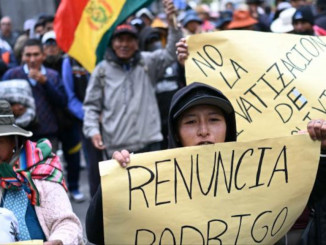
Let all citizens of the world know: Bolivia demands respect. The Bolivian people are a people of struggle and will not surrender. We overthrow tyrants democratically, because every road blockade, every statement, and every action of the people is taken by the grassroots in direct participation. No government, even one democratically elected, has the right to humiliate the people or treat protesters as vandals. The Bolivian people have dignity; they know what they want for their country, and what we Bolivians, both within the country and abroad, demand is: the immediate resignation of the current president, Rodrigo Paz Pereira, justice for our dead, the immediate release of those detained, and the safe return of the disappeared. Let us continue developing collective organization so that the working people can seize power, using the historical methods of the Bolivian working and peasant class.
Our cry must and will be heard!
Long live Bolivia!
Long live the native peoples!
Long live the workers’ struggle!
We will win!