The following is a report-back from a Bay Area resident, regarding their experience attending a hearing on a proposed ban on gas water heaters.
May 6th started out like it was going to be a typical board meeting at the Bay Area Air Quality Management District. What is typical? Well, one Wednesday a month for the last four months or so, I’ve been coming down to this ginormous edifice on San Francisco’s Beal Street, representing people that certainly have a collective voice, but not a voice that is heard. I was summoned by someone who was already involved, offering me a $100 stipend to come down on an illustrious Wednesday to speak in front of this omnipotent board in an environment that always reminds me a little too much of a congressional hearing brought to you by the less than ubiquitous CSPAN. The biggest difference being that the time allotted for each of us to speak can vary from two minutes to 30 seconds. Two minutes is looking really nice at this point since that has yet to be my allotment.
On this particular Wednesday, limited generosity. The word came down the pipe: FORTY… as in 40 seconds. As far as the source of the $100 stipend, a local environmental group dedicated to bridging gaps created by the unequal distribution of wealth. In other words, the demographics most effected by wealth disparities are not able to just take a day off and get down there to tell the Board just what is wrong with said policy that usually is conspicuously inadequate. But there is a catch. This $100 is bestowed upon individuals willing to incorporate bullet points into their spiels. Bullet points provided by the same environmental group.
So the first two times I opted out of the stipend just because I didn’t see this as a regular thing with the rationale that the stipend they were offering me could go to drafting an additional player for the team. The whole point of all of this is to increase education and participation, right?
But once I got called back for a third time, it became clear that this was actually work. So when May 6th came around, I was expecting my stipend. What I wasn’t expecting was over 130 people from a few different organizations coming to speak on their own bullet points. So, why so many people this time? I was used to 10 – 30 people the previous three times.
Agenda Item 27, Rule 9-6: Zero-NOx Electric Water Heaters. This is based on a mandate, not incentives. Naturally, incentives are much more likely to develop into people showing up with much more calm demeanors. Mandates tend to do a little more to spark emotions.
Out of the 130-some-odd speakers:
Group 1: the people that represent the poor and disenfranchised. These people can’t afford the $5,000 upgrade, not including installation, to go from a gas water heater to an electric water heater. Most of them feel like they’ve been blindsided by this mandate proposal. A $2.5 million PR campaign and most of the people in these communities have not even heard of it. They also feel insulted by the exemptions:
“There are people that can’t afford this so they will just be exempt for now.” They can rest assured to keep breathing the “tainted” air inside their dwellings that emanates from their gas water heaters, until…
There are rebates that are supposed to be available but the whole idea of a rebate is that you pay first, right? So if they don’t have the capital to begin with…?
And what mechanisms are in place to keep landlords from passing these costs onto their low-income tenants?
Group 2: the people that think this mandate is necessary and have examples of family members that have respiratory issues to hammer their points home. Most of these people make up the demographics of people that have no problem affording the upgrade. Some insinuate, others blatantly accuse the “non-compliers” as being part of the overall air pollution problem as if they know exactly what caused the respiratory issues in their examples.
Group 3: the people that are prepared for a standoff fueled by the fact that reports that show costs to be exorbitant are the lies of unscrupulous contractors and fossil fuel companies. They come equipped with warnings to beware falling prey to this rhetoric.
Group 4: the people who are actually physicians and emphasize how important this mandate is using examples of their patients suffering from respiratory issues. I think it’s safe to assume that they can afford the upgrade in their homes. A couple have already upgraded.
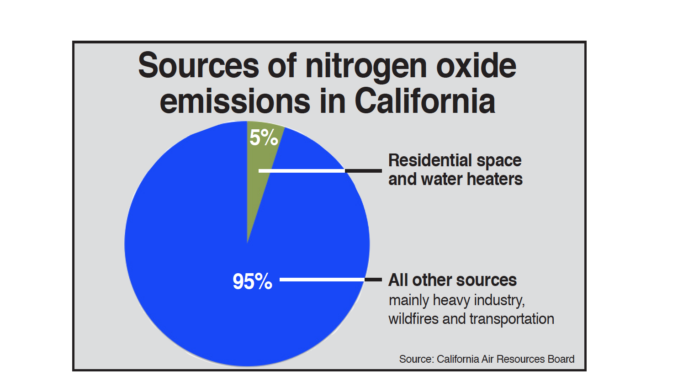
But again, aren’t we talking about tainted air inside the dwelling? Of course tainted air permeates but in this particular example, where is it most concentrated?
Group 5: the people that consider themselves part of the shrinking middle class. They are offended at the fact that there are exemptions for those considered low-income. They also will suffer from financial hardship based on this mandate but are livid because they don’t qualify for the exemption. This mandate, according to them, is part of the continued assault on the middle class.
Group 6: the people that claim to feel compassion for the low-income folks being left behind but feel like this program has already taken way too long and further tweaking before inception will just put it on the back burner for another year or two as the environmental clock continues to tick. They believe that implementation is imperative and then adjustments can be made.
Of course no one was able to use the time allotted to provide past examples of this [successful] method.
Once again, another facet of this environmental crisis with the burden on us. The BAAQMD didn’t feel any pressure on May 6th and the fossil fuel companies certainly didn’t feel any pressure on May 6th. Indoor pollution extrapolated into outdoor pollution to guilt trip us into thinking we are the crux of the problem. All of these groups can continue to wear their mission statements on their sleeves and brag about how they are paving the way for the voiceless. Those of us that “blessed the mic” for an entire 40 seconds can sleep good at night duped into feeling like we did our part and give kudos to the groups that convince us they are creating opportunities for change. But with all of these “opportunities”, why isn’t change happening? Sounds like once again, we’ve been divided and conquered.