This article is reprinted from the Speak Out Now healthcare newsletter at Kaiser Oakland in Oakland, CA.
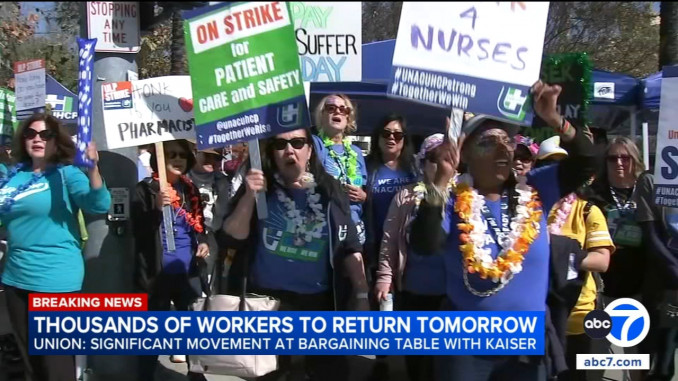
After four weeks on the picket line, the strike by UNAC/UHCP workers was called off last week (week of 2/23). While UNAC/UHCP leadership cited significant progress at the bargaining table as the reason for returning to work, including a 21.5% raise, some local agreements still have not been fully negotiated and agreed upon.
Kaiser has more than $67 billion in reserves and has shown it is far more willing to use that money to pay scabs than to negotiate with striking workers. The recent experience of UNAC/UHCP workers serves as an example for everyone inside the hospital of what may happen when it comes time for our own contract fights: Kaiser will try to starve us and force a long strike rather than meet our demands.
That is, unless we organize even more broadly and more effectively. Kaiser’s Chief of HR admitted in a public statement that hiring scabs and other costs to keep Kaiser running during the strike cost them around $1 billion dollars. Imagine the impact if most or all Kaiser workers called off work in solidarity with UNAC/UHCP workers for just a day?
This may seem hard to imagine, but if we are going against a boss as big and powerful as Kaiser, we need to push ourselves to get creative—organizing as rank-and-file workers to support each other. That means building connections not just during strikes, but every day: knowing each other and confronting the problems we face at work together. Management is stretching all of us thin, and we need to know we have each other’s backs.