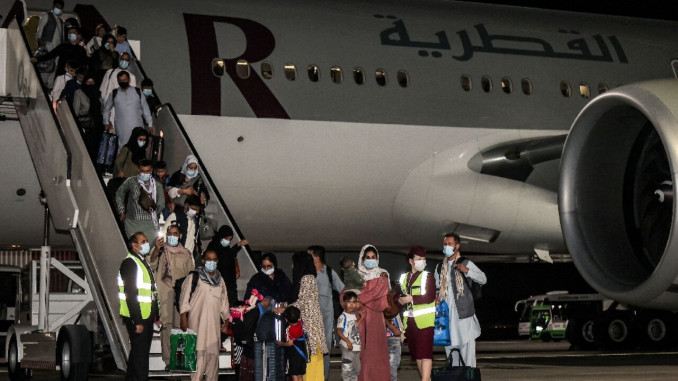
After effectively ending Afghan resettlement under the U.S. Refugee Admissions Program (USRAP), the Trump administration has discussed sending up to 1,100 Afghans (including more than 400 children) who supported the U.S. military during the war on Afghanistan to the Democratic Republic of the Congo (DRC) from Qatar, where they have been living for over a year. Those unwilling to relocate to the DRC, which is currently facing one of the world’s worst humanitarian crises, may be forced to return to Taliban-controlled Afghanistan, where they are likely to face “certain death.”
When U.S. troops withdrew from Afghanistan in 2021 and the Taliban regained control, the U.S. remained the country’s largest source of foreign aid, accounting for more than 40 percent of humanitarian support. Following the administration’s shut down of the U.S. Agency for International Development (USAID) in January 2025, all aid programming in Afghanistan was cut. This led to the collapse of essential social services like food access and health care, and the loss of protection services under the Taliban’s system of gender-apartheid. This further impoverished the majority of Afghans after decades of protracted war and political conflict.
The betrayal of the U.S.’s pledge to protect its Afghan allies, which includes interpreters, members of Afghan Special Operations, family members of U.S. service members, and others whose work put them at risk of persecution by the Taliban, is, unfortunately, not surprising. The news comes amidst Trump’s withdrawal of foreign aid, and broader anti-immigrant agenda, which has imposed an indefinite halt on refugee admissions, suspended humanitarian parole programs, expanded travels bans to include 19 countries, and restricted federal benefits for new refugees and lawfully present immigrants.
More broadly, it reveals who truly benefits from war and imperialist conflicts: that is, never those who bear their greatest risks – whether Afghan or U.S. soldiers or civilians. The devastation of the war on Afghanistan lives on, and the capitalist necessity for extraction and war proves incapable of bringing it to an end. The protection and liberation of ordinary people, whether in Afghanistan, or the U.S., requires recognizing our shared interest in opposing the U.S. war machine, and the global capitalist system that deploys this war machine.