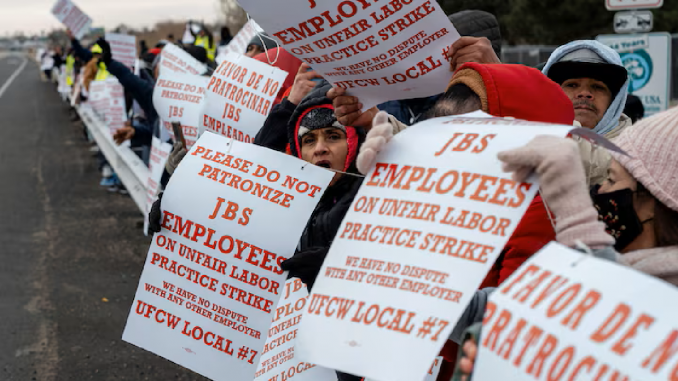
After striking for three weeks, in early April meatpacking workers in Colorado ended their strike against Brazilian meat production giant JBS. Union leadership said that 93% of members voted to ratify the agreement, although it is unclear if that was the percent of those who voted or the percent of the local’s total membership.
The two-year contract the workers ratified includes small wage increases, puts caps on any increases to health care premiums, and ensures that workers will no longer have to pay for their own personal protective gear. There are also numerous small changes to the conditions of work, many of which are specific to meatpacking work.
While this strike made many small improvements that obviously mattered to workers in their daily work and lives, the gains are limited and specific. Not only are they limited, by striking on their own rather than accepting a nationwide JBS contract that was negotiated for all other JBS meatpackers last year, the 3,800 workers at this facility reportedly opted out of a pension plan that all other JBS meatpackers opted into. Thus it is uncertain just how beneficial the strike was for the workers at the plant, or whether the union leadership accepted small and short-term gains at the expense of longer-term improvements.
It is still worth noting that this factory had a heavily immigrant workforce in a time when immigrant workers are targeted for repression, and they began the strike isolated, without the support of the 26,000 other JBS meatpackers nationwide. Despite these challenges, they managed at least some improvements. This shows that even under adverse conditions, when workers stick together, organize and strike, they can often win, or at least make some gains.
Imagine what they could do if all 30,000 workers united to put some real pressure on the company and the system or if workers in other industries struck in solidarity with the meatpackers.