A new Ebola outbreak is spreading through the Democratic Republic of Congo and neighboring Uganda. Hundreds have already died, and health authorities are racing to contain the disease.
For many outside Africa, outbreaks like this are seen as another unfortunate but inevitable natural disaster. A dangerous virus appears, people become infected, and the world watches from a distance. But even though Ebola is a biological disease, the conditions that allow it to spread through communities, overwhelm healthcare systems, and kill hundreds or thousands of people are social.
The current outbreak is centered in eastern Congo, a region facing war, mass displacement and a humanitarian crisis. Healthcare workers struggle to reach affected communities while population movement and cross-border travel make disease control more difficult.
This tragedy, like many others, is deeply rooted in social and political conditions. There is nothing natural or inevitable about it. Poverty, weak public health infrastructure, displacement, war, and distrust of authorities all play a role. None of these conditions appeared by accident.
To understand why these conditions persist, we must look beyond the current outbreak. The Congo is one of the richest nations in the world in terms of natural resources. But for more than a century, much of that wealth has gone to foreign empires, corporations and local elites rather than the people who live there. Under Belgian rule in the late 19th and early 20th century, the Congo was arguably the most exploited region on the planet, with millions of its inhabitants virtually enslaved as prison laborers for Belgium’s King Leopold. At least a few million died in that period, and the result of this long history of exploitation and pillage is a region that continues to struggle with poverty and internal conflicts, weak infrastructure and underfunded healthcare systems. The current conditions in the Democratic Republic of Congo and much of Central Africa have been nurtured by this century and a half of imperialist exploitation.
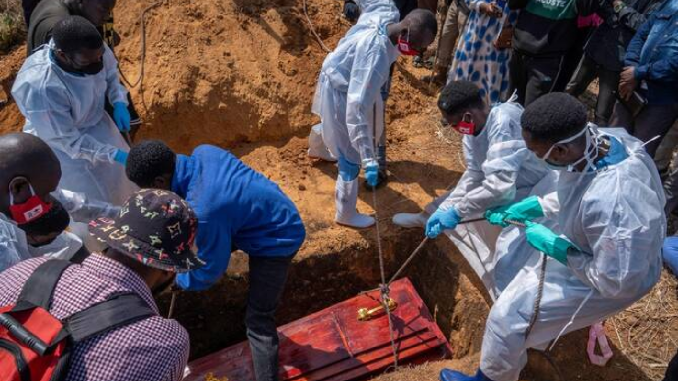
This is especially important because Ebola is not an unstoppable disease. Even if the strain responsible for the current outbreak has no approved vaccine or treatment, previous outbreaks have shown that public health measures can dramatically reduce transmission. Rapid identification of cases, contact tracing, community education, safe burial practices, and accessible healthcare all help contain the disease. In other words, many Ebola deaths are preventable.
When treatment centers are attacked or patients refuse treatment, many people in wealthy countries blame ignorance or superstition. This explanation is convenient because it avoids asking harder questions.
But distrust of authorities is not created overnight. Communities across Africa have experienced generations of imperialist exploitation, violence, corruption, and broken promises from governments, corporations, and foreign powers. Trust cannot be demanded during an emergency. It must be built through years of reliable healthcare, education, and public investment. For most of the region’s history, the opposite has actually occurred. This is why millions simply do not trust supposedly impartial international aid agencies.
Recent cuts to international health programs such as USAID have made an already dangerous situation worse. Disease monitoring networks, outbreak response programs, and community health initiatives have all been weakened by these cuts. This does not change the political role that organizations such as USAID have historically played in advancing U.S. interests abroad. But the destruction of these public health programs is not a blow against imperialism. It is a blow against ordinary people who pay the price when disease surveillance, prevention, and treatment efforts disappear.
We already know how to prevent Ebola deaths. The obstacle is not a lack of scientific knowledge. The main obstacle is a global system that has extracted enormous wealth from Central Africa while failing to provide even the most basic healthcare, infrastructure, and social conditions needed to protect the people who live there.
As long as profit and geopolitical interests take priority over human need, preventable tragedies like this will continue to return. The fight against Ebola is one part of our larger struggle against imperialism and the capitalist system that enriches the few while working people face the consequences. For the sake of all of humanity, in Africa and elsewhere, this system must be ended.