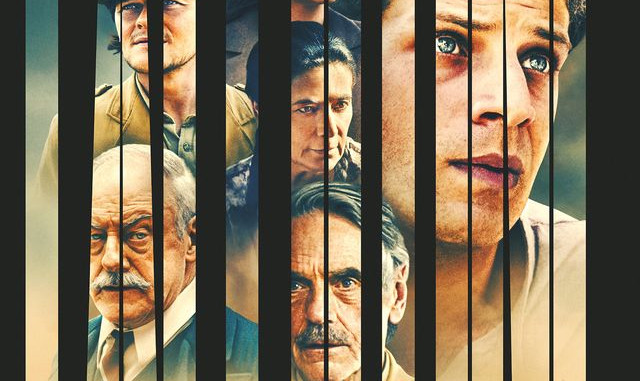
Palestine ’36 takes us back to a lesser-known part of history, over a decade before the mass displacement of Palestinians in the Nakba (catastrophe) of 1948. Directed by Palestinian filmmaker Annemarie Jacin, the film recounts the violent oppression of British colonial rule during that period, and the subsequent mass uprising of the local people.
Palestine ’36 highlights the clash between two worlds in 1936: the imperialist British powers wielding political and military control over the region, and the villagers fighting for the right to raise their families in their homeland. We see how the British directly supported the Zionist movement and enabled the transfer of land away from the Palestinian people. As British repression intensifies through security checkpoints, mandated curfews, and daily harassment of Palestinians, the viewer can’t help but see the foreshadowing of the modern-day occupation.
The 1936 struggle culminates in the revolt of the Palestinian people through both a general strike and guerrilla warfare. Initially pressuring the British through a withholding of their labor, the resistance intensifies to the dismantling of British rail lines, destruction of an oil pipeline, and building a network of armed resistance to defend their villages. We see the core importance of women in this movement, both in marches upon the British representatives but also in critical field support for the guerrilla fighters.
Jacir seamlessly intersperses colorized historical footage throughout the film, to remind us that these were real events that happened to real people. Watching this footage nearly 100 years later, while the United States engages in its own atrocities in the region, reinforces the time scale of working people’s struggle against racist, imperialist, and fundamentally capitalist oppression.
However, the lesson of Palestine ’36 is that we do not have to let this thread of suffering and destruction continue. The current, growing global consciousness around the genocide of the Palestinians shows that people everywhere are demanding an end to this system of continuous war and exploitation. We are recognizing that our struggles are interconnected, and that working people have the power to stand up together and break this cycle.