April 17, 2026 article of the New Anticapitalist Party-Revolutionaries (NPA-R) in France, translated from French.
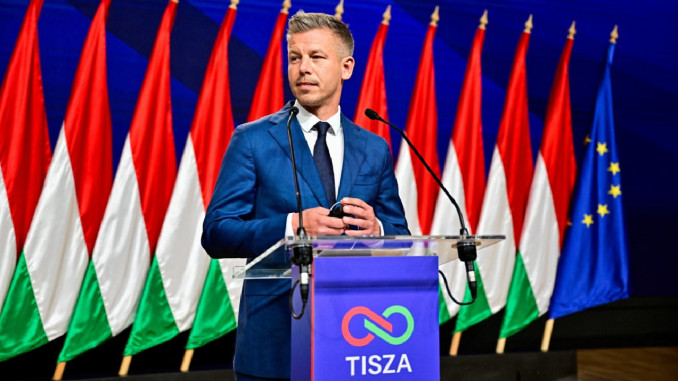
After 16 years in power, the ultra-reactionary Hungarian Prime Minister Viktor Orbán suffered a resounding defeat in the parliamentary elections of April 12, losing to the main opposition candidate, Peter Magyar – 54% to 38%. The only other party to narrowly secure seats in Parliament was the far-right “Our Homeland Movement” group, with 6%. The election was widely anticipated, perhaps more so by the liberal media than by the voters themselves, as a “referendum on Europe.” This emphasis on the issue resulted in high voter turnout – 80% – but also widespread fears of fraud – 76% of Hungarians expected “interference.” This is precisely the approach Orbán chose to salvage the situation, staging a fake discovery of Ukrainian weapons near the border, then inviting JD Vance – an accepted form of interference – to raise the specter of EU (European Union) liberal lobbies. All to no avail.
The rats leave the ship… and take back the helm
Peter Magyar is himself a former member of Orbán’s Fidesz party, who left to reposition himself by launching a takeover bid for the Tisza party, largely inactive until then (but therefore also free of corruption scandals). A self-proclaimed “liberal conservative,” he distinguishes himself from Orbán primarily through a more pro-European stance. For over a year, he has been engaged in a protracted campaign, skillfully establishing himself as the only alternative to Orbán, whose decline was becoming increasingly apparent. While he has put forward a few promises to win over the popular vote – increased spending on education and healthcare, anti-corruption measures – and the middle class – tax cuts and subsidies for SMEs – his result is essentially the product of a vote of discontent with more than 15 years of authoritarian, anti-social, and reactionary policies.
A relief, but not a solution
The Hungarian working class is quite right to breathe a sigh of relief and rejoice at having finally ousted Viktor Orbán. But his replacement is merely a recycled version of his regime. Not to mention the judges, high-ranking officials, journalists, and others installed [under Orbán] to lock down the state apparatus and the public sphere.
But the social atmosphere in the country has not been calm in recent years, with a long teachers’ strike, short and organized [and] sometimes victorious strikes in the automotive sector, a wildcat strike by Budapest garbage collectors last year, and last year’s massive Pride march, a veritable plebiscite against Orbán. This is where the opportunities lie. Orbán is out of the picture; it’s up to the workers to push further.
Dima Ruger