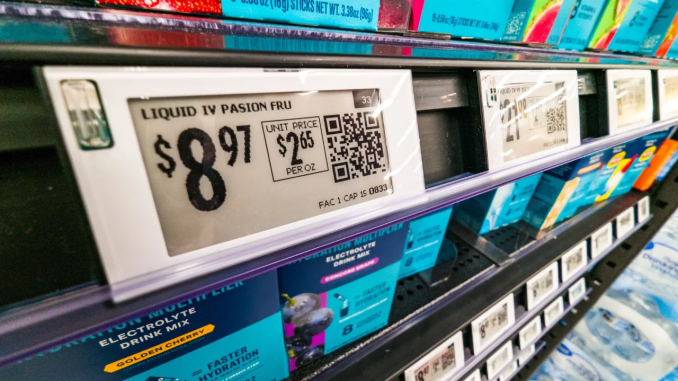
All over the U.S., working people are struggling to make ends meet. The Trump administration’s cuts to SNAP make it harder to get food on the table, and the surge in gas prices due to the war on Iran is still affecting almost every state in the country. Even now, when so many people are facing decisions about what they have to go without to pay their bills, corporations are still scheming to extract more and more money from us.
Dynamic pricing is a practice where companies use data about how many people want a product and how badly they want it to change prices in the moment. This practice is not new; it might be used to lower the price of food that’s reaching its sell-by date for example. It has become common among hotels and airlines to raise prices for high-demand dates and times.
Now, with the rise of online shopping and data tracking, a practice known as surveillance pricing is on the rise. Companies can use data about our online activity to create a demographic profile, which can make it easier to predict what we want to buy and how much we can afford to spend. They can then change prices in real time to get the most money possible for a product without losing the sale.
This practice is mostly confined to online platforms like Amazon for now, where it’s harder for two customers to tell that they are being charged different prices for the same purchase. Supermarkets like Walmart, Kroger, Target, Safeway, Albertsons, and more use surveillance pricing on their websites and apps, and the third-party app Instacart has had to publicly apologize for running tests on their users, charging different people in the same locations different prices for the same items.
Walmart has also been investing in the development of technologies like “smart carts” — shopping carts equipped with scales, scanners, and tracking sensors that would allow customers to check out directly on the cart itself. That may seem like a more streamlined process, but it could also be used to bring individualized pricing into physical stores. For example, if a customer adds hot dogs to their cart, an algorithm could predict they would also need hot dog buns or ketchup, and raise the prices of those items before the customer picks them up. And without the side-by-side comparison with other customers in the checkout line, it could be much harder to tell if you’re getting overcharged.
Companies can also use the confusion around things like inflation, tariffs, and increased shipping costs due to fuel shortages as an opportunity to raise prices even beyond what they need to and turn extra profit, because customers will be expecting higher prices, but won’t know exactly where price increases are coming from. And it’s not as if corporations making higher profits helps their employees at all! All of these price-gouging methods are ways of stealing money from working people and funneling it to the higher ups who make too much to begin with.
The capitalist system functions off of turning essential products like food, clothing, and medicine into just another way to concentrate wealth in the hands of the ruling few. If we want to live in a world where food is produced for the people who need it, not for the corporations that want to wring every penny out of it, the whole system has to go!