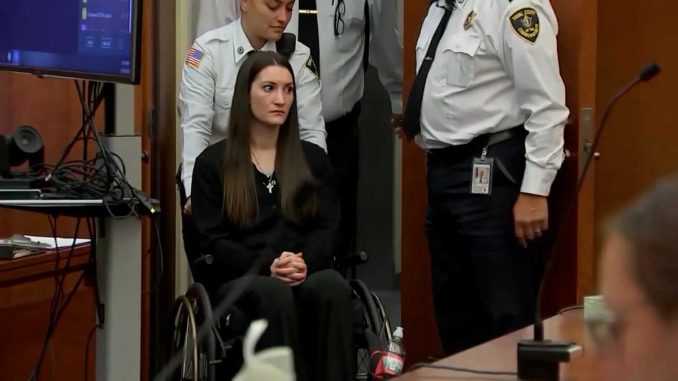
Lindsay Clancy’s trial has made lots of headlines in the mass media. She killed her three young children and the jury was supposed to determine whether she was sane (and therefore a criminal) or insane. The jury voted 11 to one that she was insane. But the legal system insists that such decisions be unanimous, so it was a hung jury with no decision. Seriously, under what scenario could her behavior have been sane? This should have been a mental health issue from the beginning; but it’s not under the existing system!
Clancy’s trial has once again stirred up a storm over post-partum depression (PPD). Twenty-three years ago, Brooke Shields spoke out about this frightening and debilitating illness. Princess Diana, Reese Witherspoon, Adele, Cardi B, Kylie Jenner, Hayden Panettiere, Serena Williams, Courtney Cox, Halle Balley, Bryce Dallas Howard, and Gwyneth Paltrow are just a few high-profile celebrities who have opened up about the horrors of PPD. Yet, we are still shocked to learn how this sinister illness can actually play out. It’s certainly not only celebrities in the long line of news stories about mothers who kill their children. Many are successful in terminating their own lives as well, unlike Clancy.
Why is this considered first a legal issue and not a health care one? Why do so many women consistently lack emotional, medical and other basic support when they give birth? Why is this still happening in the richest country in the history of the world? According to the journal Translational Psychiatry, rates of this illness in India, Egypt, Sudan and Saudi Arabia are similar to the U.S. while Mexico, Brazil, Ethiopia, and Russia have lower rates of this disease than the U.S.
According to women’s health care professionals, support is a critical aspect of prevention, as depressed mothers often say that their feelings of depression or anxiety were brought on by “lack of support” and “feeling isolated.” The World Health Organization (WHO) explains that health is influenced by the “circumstances in which people are born, grow up, live, work and age, and the systems put in place to deal with illness.” WHO further states that “unequal distribution of health-damaging experiences is not in any sense a ‘natural’ phenomenon but is the result of a toxic combination of poor social policies, unfair economic arrangements [where the already well-off and healthy become even richer and the poor who are already more likely to be ill become even poorer], and bad politics.”
Indeed, predisposition for PPD includes so many working-class life circumstances, like financial worries, job stress and health challenges associated with polluters in our communities, that more attention to this problem should be automatic in our healthcare system.
But the U.S. healthcare system is a thoroughly for-profit one, which only serves the wealthiest few. More people are without insurance because of the staggering expense. So, much prenatal and post-natal care is unattainable for them. In short, we will need to organize and fight to have a humane childbirth system.