Published on May 29, 2026 by the New Anticapitalist Party-Revolutionaries (NPA-R) in France, translated from French.
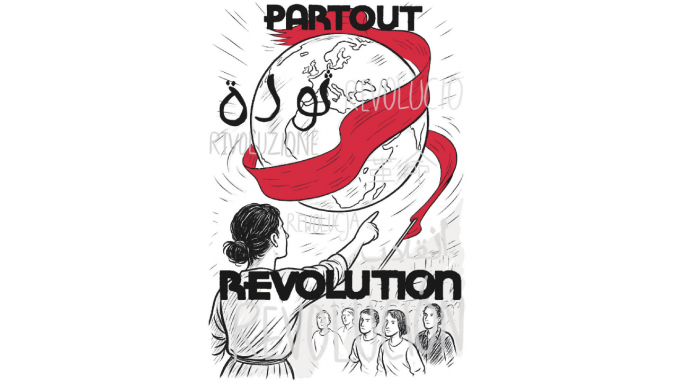
The Paris Internationalist Meetings on May 15, 16, and 17 brought together anarchist, Trotskyist, Leninist, and Communist Left activists from five continents. This fourth edition aimed to discuss, on the first day, the role of revolutionaries in working with
youth, and on the following two days, international issues concerning opposition to imperialist wars and social wars. This meeting was marked by contributions from activists from Asia, where the proletariat is expanding, and, of course, by the war against Iran, all against the backdrop of the growing rivalry between the United States and China.
Establishing Communism Among the Youth
The first day focused on practical discussions regarding revolutionary intervention in educational and training settings, as well as in working-class neighborhoods. A series of presentations was followed in the afternoon by responses and exchanges. Differences
in scale, conditions of activism, and the development of the class struggle highlighted diverse experiences, all shaped by social polarization and the militarization of societies.
Comrades from the RSO in Germany and the LCR in Japan addressed the emergence of significant youth minorities mobilizing against the looming military conscription, along with the difficulties of building national mobilizations given that unions are very reluctant to get involved.
Comrades from Izar in Spain spoke to highlight the specific characteristics of youth politicization—not just among students—which makes this a strategic sector conducive to the spread of revolutionary ideas. In the same vein, the GAM of Germany (International Socialist League) raised the issue of not confining youth to a mere recruitment pool, but rather applying tailored tactics that would allow new layers to integrate into minority revolutionary organizations.
The comrade from the IBT in New Zealand emphasized the role of youth in democratic struggles (issues of trans identity, education, proletarianization), and the International Communist League (Spartacist), in agreement with the previous interventions, stressed the need to take a step back from activism in order to understand the defeats of the workers’ movement.
Frontline from Sri Lanka, Bir Kar from Turkey, the MST from Argentina, and the NPA-R developed these discussions and shared insights on two different levels. First, regarding work in educational and vocational training settings, through direct intervention or via trade unions, or legal channels permitted by the Erdoğan regime, or NGOs in the case of Sri Lanka. With two challenges for activists: linking this to the revolutionary core groups and to link this youth work to the building of the revolutionary organization.
Next, the MST raised the need to reflect, in the context of these mounting dangers—between the rise of the global far right and militarization and wars—on the need to promote international meetings and envision broad anti-capitalist organizations capable
of welcoming a new generation. Lotta Comunista (LC) from Italy, for its part, reaffirmed its analysis of the current period, namely that of social passivity. This in no way implies passivity in intervention on the part of revolutionaries. Thus, LC presented its significant recruitment results, but above all its contacts with tens of thousands of people through discussions generated by systematic work selling newspapers, door-to-door canvassing, training and organizational meetings in workers’ circles, and volunteer work in neighborhoods—activities that, in the experience of these comrades, allow them to build connections and gauge the commitment of the young people who have come closer to the movement.
Lenin’s arrival in Shanghai, Trotsky’s return to Tehran
“God created war to teach Americans geography.” This bittersweet quip by Mark Twain became a common thread for participants at the internationalist conferences. The first conference addressed the war in Ukraine, the second the genocidal logic in Palestine,
and the third the rise of China and the dynamics of national liberation struggles. The 2026 conference overlaid these political points with analyses of the tasks facing revolutionaries in the face of the growing conflict between the United States and China, and the war in the Middle East, particularly in Iran.
The anti-militarist experience of the Belgrade anarcho-syndicalists with Russian and Ukrainian deserters, their organization of migrant workers, and their participation in youth struggles to challenge the Serbian regime provided a vivid picture of the realities
and potentials of the situation, far beyond the differences regarding the forms of proletarian organization. At the heart of these discussions were the assessments to be made regarding the revolutionary character—current or past?—of the dynamics of national struggles, and the progressive nature of this or that regime in its real or supposed opposition to the most powerful among them: the United States. What concrete forms should the perspective of revolutionary defeatism take, namely, transforming a war into a civil war?
The overwhelming majority of delegations rejected positions tending to justify “the defense of China” against American imperialism. The LCI (Spartacist) and the International Socialist Alternative (Revolutionary) argued to deny China any imperialist character, downplaying its capitalist nature, without explaining the formation of modern social classes, primarily that of the proletariat but also of a bourgeoisie. There were numerous objections, particularly on economic grounds, but also on social grounds, raised by Chinese comrades who face significant difficulties in organizing without a public space for discussion among youth as well as in workplaces.
Discussions on the war in the Middle East and the class struggle in Iran, just like those on China, were grounded in experiences within dictatorships. The conference benefited from contributions by organizations active in Iran: Mandjanigh and the Revolutionary Marxist Tendency of Iran.
Three lines of discussion ran through the exchanges: how to analyze the failure of Palestinian and Kurdish nationalism? What concrete meaning should be given to the prospect of a U.S. defeat? And finally, the tasks of revolutionaries in Iran. The national question has returned to the forefront, but compared to previous meetings, the discussions were more fluid—without glossing over the real differences—and the limitations of the liberation movements became clearer.
In a telling detail, while some American or European delegates emphasized the revolutionary character of these struggles, the delegates from Sri Lanka explained their fight against the divisions between Sinhalese and Tamils, but also against local nationalism opposed to the union of workers in India and Sri Lanka. Along with the Iranian delegates, they emphasized the need to systematically highlight the class character of the struggle in the face of cross-class mobilizations.
Another point raised was the opposition of a majority of the delegations to “campism”—that is, the illusion of forming military blocs with this recalcitrant Iranian regime, which, incidentally, Trump seeks to maintain by facilitating the transition from a bourgeois republic of the mullahs to an equally bourgeois republic of the Pasdaran.
Finally, an important discussion was raised regarding the revolutionary attitude toward classes other than the proletariat—a discussion that is only just beginning. This serves as a reminder that, within the framework of the development of modern social classes, the role of the proletariat is to take on the tasks of the unfinished revolutions of the past: no faction of the bourgeoisie is more progressive, and this has been the case since…1848! This is Leon Trotsky’s theory of permanent revolution, and we are working to convince other currents—through discussion and activism—despite the political distance and differences in traditions within the revolutionary movement. A call will be issued in the fall to prepare for an upcoming meeting, which we hope will be richer and broader in scope.