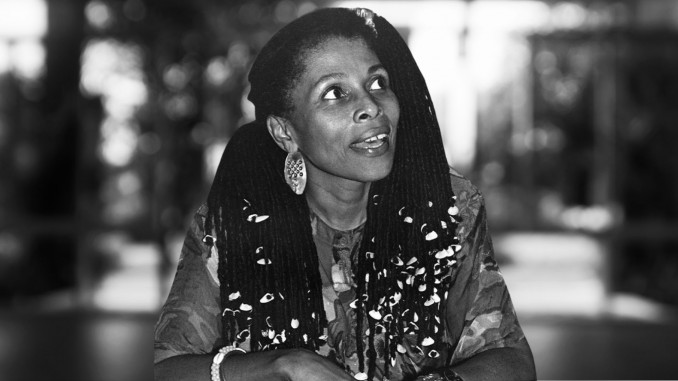
Assata Shakur, a fighter in the Black freedom struggle, passed away last September 25 in Havana, Cuba.
Assata Shakur was born in 1947 with the name JoAnne Deborah Byron, and spent her childhood in Queens, New York and Wilmington, North Carolina. Assata and her family struggled with poverty, creating turmoil within the family and leading her to run away several times. In addition, from early on in her life she could not avoid the realities of the dehumanizing treatment that Black people experienced and felt in a deeply racist society.
As Assata pursued her education in community college in 1960s New York, she quickly threw herself into the civil rights, Black power and anti-war movements developing around her, participating in sit-ins and protests. She changed her name to Assata (“she who struggles” in Swahili) Olugbala (“love for the people” in Yoruba) Shakur (“the thankful one” in Arabic) and referred to her birth name as her slave name.
Assata also developed a deep solidarity with anti-colonial movements, from Viet Nam to those taking place throughout Africa.
Assata quickly became attracted to the more militant wings of the movement. Her worldview ultimately evolved into one that, “…nobody in the world, nobody in history, has ever gotten their freedom by appealing to the moral sense of the people who were oppressing them.”
She briefly moved to Oakland, California and joined the Black Panther Party for Self Defense. She soon moved back to New York and became a prominent leader in the local Black Panther chapter in Harlem, taking responsibility for the Free Breakfast for Children Program. While the Panthers attracted many of the most dedicated and militant activists in the Black movement, they were also major targets for repression by the United States government. This repression looked like everything from infiltration and surveillance to outright assassination of Panthers like Bobby Hutton and Fred Hampton. In the context of the systematic repression that the Panthers faced, they ultimately collapsed as an organization.
As the Panthers disintegrated, Assata joined a more militant offshoot group called the Black Liberation Army that had the perspective of igniting an armed struggle to liberate Black and other oppressed people. As militant, sincere and dedicated as many of the individuals who participated in groups like the Panthers and Black Liberation Army were, the organizations ultimately faced a major limitation: they did not fundamentally look to the interracial working class as the only force that could tear down the structures of capitalism that exploited and oppressed both Black people and all other working people. This failure to root themselves in the larger working class isolated not only the Panthers but also Assata and her comrades and made them vulnerable to targeted repression by the government.
This came to a head when Assata and her comrades Zayd Malik Shakur and Sundiata Acoli were targeted by state troopers on the New Jersey turnpike in May of 1973. The troopers pulled over their vehicle supposedly because of a broken taillight, but the situation quickly escalated. What followed was a shootout that left Assata’s comrade Zayd Shakur and New Jersey state trooper Werner Foerster dead. Assata was shot in both arms and in her shoulder. Forensic evidence later confirmed that she was shot with her hands up in the air.
Assata was arrested, convicted by an all-white jury of killing the state trooper, and sentenced to life plus 33 years in prison. She faced horrendous conditions in prison, in men’s facilities and in solitary confinement. The U.S. government had a vendetta to carry out against the Black movement and Assata was a target.
On November 2, 1979, Assata was broken out of prison with the help of some of her former comrades. Regarding her escape from prison, she has characterized herself as a “twentieth century escaped slave.” Humiliated by her escape, the FBI put up “Wanted” posters in the New York and New Jersey area offering $1 million dollars reward (which the Obama administration in 2013 doubled to $2 million). Her supporters poked fun at the “Wanted” posters by producing posters saying, “Assata Is Welcome Here.”
After living underground in the United States for several years, she made it to Cuba, which she characterized as a “maroon society,” a reference to the communities that runaway slaves built after they escaped captivity. She spent the rest of her years in living in exile in Cuba, where she continued to speak out against imperialism and worked as a teacher.
In recent years, Assata’s legacy has been rediscovered by activists within the Black Lives Matter struggles, particularly with the adoption of “Assata’s chant” that proclaims, “It is our duty to fight for our freedom. It is our duty to win. We must love each other and support each other. We have nothing to lose but our chains.”
She once proclaimed, “…I have declared war on all forces that have raped our women, castrated our men, and kept our babies empty-bellied. I have declared war on the rich who prosper on our poverty, the politicians who lie to us with smiling faces…”
While we might have differences as to what it will take to liberate poor and oppressed people, we recognize Assata Shakur’s lifelong dedication as a fighter for Black liberation and support her declaration of war against this system.