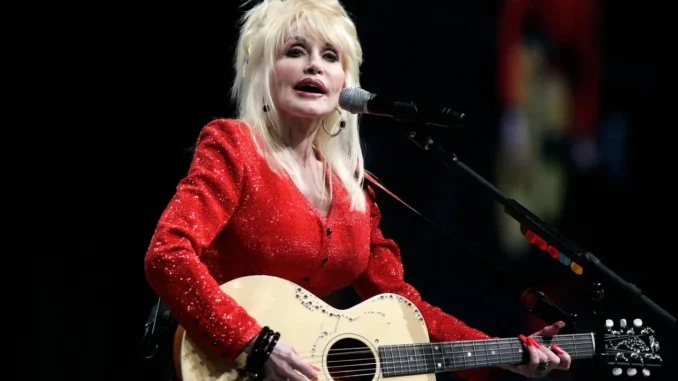
Dolly Parton was in life and is in death an icon for values we all should have.
Her talents, notably singing and songwriting, won the attention of millions. Her humility, honesty, and generosity won our hearts and minds.
Dolly’s messages often came through in her music. Her concern for the exploitation and oppression of women workers was unyielding and most famously on display in her song “9 to 5” and in the 1980 movie of the same name in which she co-starred with Jane Fonda and Lily Tomlin, showcasing the struggles of women office workers. The song and film were inspired by the real-life grassroots organizing of 9to5, National Association of Working Women, which began in the early 1970s.
Her other concerns, no less important, were often reflected in her public statements and philanthropy, including institutionalized racism, LGBTQ+ oppression, poverty, education, environment and the struggles of the working class generally. Her message was consistently about loving everyone and the power of love over hate.
Dolly’s free books for children program, Imagination Library, doesn’t ask for proof of income but, if you sign up, you get a book a month. Based on her music, she could have been far wealthier than she was; but she put her money towards basic programs that didn’t require anyone to jump through hoops of red tape to benefit. In a capitalist world that encourages everyone to look out first for themselves, Dolly stood for something different, and people adored her for that.
She claimed to be neutral politically, meaning neutral between Democrats and Republicans. She refused the Presidential Medal of Freedom offered by both Presidents Trump and Biden. She said she did this because she didn’t want to alienate anybody. Many people see that, because she came from a “dirt-poor” working-class background that helped shape her values, she stuck to those values and refused the medals of honor because she didn’t need that acclaim to be true to what she believed. A cynic might say that she wanted to maintain the biggest possible paying audience for her recordings and other business enterprises. The reality is that, in a capitalist society, artists generally reach a mass audience only through the mediation of big business. But, despite the pressures of commercial success, Dolly rose above those forces and demonstrated extraordinary consistency in the messages she radiated through her art and philanthropy.
People on both the right and the left express their love for Dolly. A political cartoon on a newspaper editorial page the day after her death showed two people, one labeled “red” and the other “blue,” holding hands and looking up at Dolly’s name made up of stars in the sky. In practice, Dolly was an advocate for all the exploited and oppressed, whether they shared her political opinions or not. She expressed an optimism that we might organize together to make a world free of exploitation, oppression, war, and climate destruction.
Here is a video of Dolly performing “Peace Train” by Yusuf/Cat Stevens with Ladysmith Black Mambazo.