{This article is part of a “Special Report” published by the New Anticapitalist Party-Revolutionaries (NPA-R) in France (translated from French), published in Revolutionaries No. 66, Nov. 1, 2026}
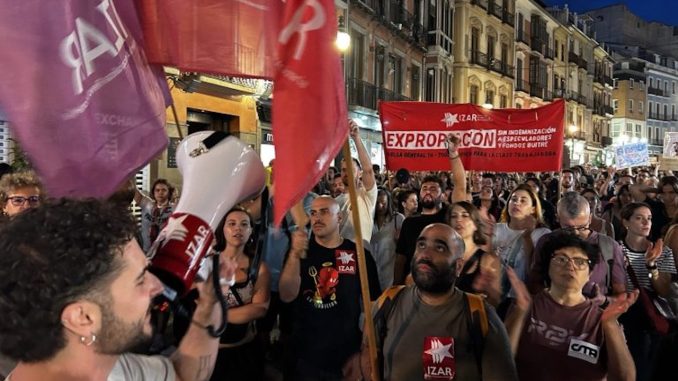
On September 23, 2026, Maricarmen, 87, was evicted from her home on a stretcher by the SAMU emergency medical service after the vulture fund Urbagestión—which had purchased the building for speculative purposes— raised the rent from 500 euros to 1,650 euros.
Protests for housing are shaking up the political arena
Massive protests forced Urbagestión to allow Maricarmen to return home. Sadly, she passed away in the hospital.
But the protests demonstrated their ability to achieve victories, while denouncing an economic system that allows 13 companies to own up to 100,000 rental units and to speculate at the expense of the right to housing and a decent life for everyone.
In eight years, the “most progressive government in history” has failed to address the needs of the working class and young people regarding rent prices, a ban on evictions, or wage increases. Its 2023 housing law does not challenge speculation.
Those who have taken to the streets know this, just as they know that the right and the far right are lying when they point to migrant workers as the cause of our misfortunes. The “invaders” are the investors—whether Spanish, American, or European—not the migrants.
An Election-Driven Maneuver by the Left and Union Leaderships
Seeing these mobilizations as a unique opportunity to shift the debate toward social issues rather than reactionary themes, Pedro Sánchez announced that the elections would be moved up to November 29.
Union leaderships then called for a general strike on November 11—not against him, but with the clear aim of supporting his campaign. They had not called for a general strike in fourteen years, even as this government has increased the military budget by more than 196% since 2018, while rents have risen by 45% and the cost of living by 27%.
The encampments, the united strike committees, and the movement’s self-organization
At the heart of the housing movement, a encampment was first set up in Plaza del Sol in Madrid, then in many other cities, with massive daily general assemblies discussing the “11N,” and creating united strike committees, bringing together students and workers—whether unionized or not.
These structures make it possible to decide on actions and future directions without constantly depending on the will of union leaderships and the institutional left, which will want everything to stop once the election campaign begins.
Based on an article by Ruben Quirante of IZAR
All Articles from this Special Report
Youth and workers in struggle across Europe
Albania: After Nearly Six Months of the “Flamingo Revolution,” Gen Z Takes to the Streets Again
Elections in Serbia: Vučić Is Out—What Now?
Germany: Gen Z Against Militarism
Italy: “If you don’t let us dream, we won’t let you sleep!”
Movement for Housing, Wages, and Against Rearmament Policies in Spain
Greece — October 21 Should Mark the Beginning: Let’s Break the Election Wait Through Struggle!