The enormous growth of artificial intelligence in recent years has massive consequences for our society. AI has been sold to us as inherently part of social progress. At the same time, whatever concerns people have about AI, whether job loss, threats to our privacy from corporate and government surveillance, energy bill hikes or anything else, we are tol nothing can be done because the rise of AI is inevitable.
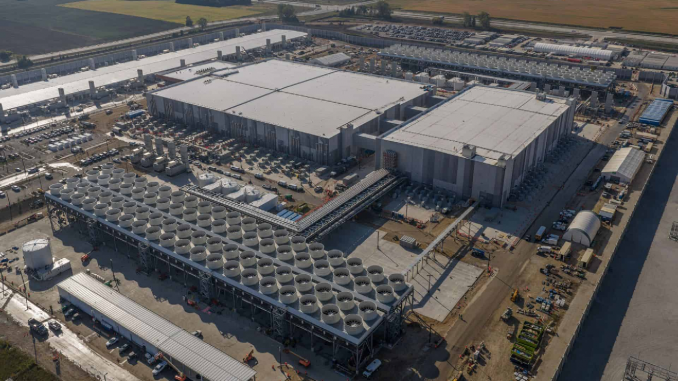
With the massive expansion of AI, there have also been incredible environmental costs that come with the demand to build infrastructure that can support these systems. In particular, the construction of enormous data centers in mostly rural towns across the country has had devasting consequences for local ecosystems.
To prevent overheating, data centers consume unimaginable amounts of water to cool their servers. In 2023, data centers in the U.S. consumed 17.4 billion gallons of water, which is the equivalent of what around 160,000 average U.S. households consume each year. To add to the insanity, roughly two-thirds of existing and proposed data centers will be in regions of the United States currently facing drought conditions.
In addition, data centers consume incredible amounts of electricity. Nationally, they consume around 176 KWh per year, which is more than 4% of all electricity consumption across the country. With this increase in demand for electricity, we are expected to pick up the tab when we have to pay our utility bills. In Virginia, which has the highest concentration of data centers, utility bills have increased 267% over the past 5 years.
The generation of power for these data centers needs to come from somewhere and is largely dependent on the burning of natural gas. A paper from researchers at Cornell University estimated that there will be an additional 24 to 44 million metric tons of greenhouse gases every year just to support the development of AI. This is the equivalent of adding 5-10 million additional cars on the road.
While the rise of artificial intelligence and all of the downstream consequences are sold to us as inevitable, that is not true. People all over are reckoning with the reality that the needs of these data centers directly compete with our needs – for water, energy, land and more.
City councils throughout the country have become fiery battlegrounds over proposed development of data centers. In both Republican and Democratic leaning regions, the opposition to data centers among grassroots people has been a largely unifying phenomenon. The data centers built in people’s backyards have generated enough backlash that many political candidates at local levels have been forced to stake out their political programs largely centered on opposition to data centers.
While this sort of community mobilization is a positive step, it won’t be enough. Even in circumstances where communities are mobilized enough to say, “not in my back yard” and construction moratoriums are passed, we still live in a system that will have no problem destroying someone else’s back yard so long as there are enormous profits to be made.
Capitalism is a system that is willing to make investments for profit whatever the consequences, even if it means destroying the ecosystems of the planet it exploits. It’s about time that we as working people, the overwhelming majority of humanity, begin to use our real intelligence to reorganize society to meet our needs. If we were in charge, technology would be subordinated to meet the needs of our lives, not subordinating our lives to meet the needs of the capitalists’ technology!