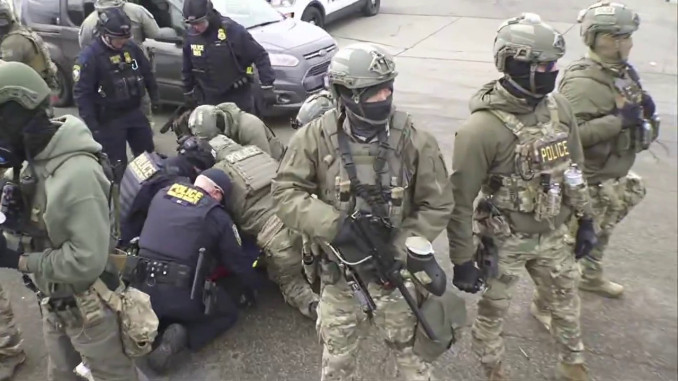
As Trump’s deportation campaign has gained momentum over the first year of his second term, Immigration and Customs Enforcement (ICE) and Customs and Border Protection (CBP) have become the violent faces of the regime’s anti-immigrant policies. As they have gone into targeted cities with aggression and staged spectacle, ICE and CBP have terrorized local populations, immigrant and non-immigrant. Under Trump, they have expanded their activities far beyond their previous boundaries and have shown themselves to be, at least potentially, a paramilitary political force with which to repress all of us.
Trump, egged on by his advisor Stephen Miller, who doesn’t even attempt to hide his white supremacist worldview, is expanding the reach of ICE and CBP while giving them a freer hand than they have had under any other president. But Trump and Miller haven’t fundamentally changed the roles of these agencies, nor did they create and develop these organizations and their cultures of violence and impunity. Both of these agencies existed before Trump and both exhibited many of the same characteristics before he gained control of them. They are today clearly part of a larger repressive apparatus that has been and will continue to be used against immigrants, dissenters, and the larger working class.
What are nations and borders, really?
Borders are literally boundaries created by the ruling class of a region or nation and agreed upon with the ruling class of another nation. The precise, well-marked and well-defended borders that we know today are also remarkably new to human history. In most cases, they have been around a century or two at most. Many lines on the map are drawn in blood from the violent conquests of rulers to carve up more and more territory for themselves.
The modern nations and their borders that we know today are in reality a means by which capitalist ruling classes maintain dominance over the large working class living within their borders. They use these borders to claim the right to tax us, to force us to live by laws that benefit them, not us, and even to prepare and organize us to fight wars for them against working people of other nations.
Around the world, workers are a solid majority of the population and, throughout the world, billions of workers struggle to survive and create decent lives for themselves. While the capitalists who hire and fire us and get rich by doing so are driven by their need to make profits, we work not for accumulation and profits, but just to survive and feed our families. These two classes – the tiny capitalist class and the much larger working class – have fundamentally different interests. And this is something that the capitalist ruling classes never want us to understand. Although it is often difficult to see, working people in one country really have their interests in common with workers in other countries and no interests in common with the capitalists of their own nation.
In this way, the nations that these capitalist ruling classes have created, the national feelings that they work hard to create among the population, and the borders that they say are hard and fixed, are all used by the ruling classes to manage and exploit us for their benefit, without ever allowing us to see our common class interests and unite.
Nativism, national restrictions, and policing in the modern U.S.
By the beginning of the twentieth century, the U.S. state had expanded and colonized the entire North American continent from east to west. The population was still increasing, but no new territory was being added to the land which the nation would occupy. This led to a widespread “nativist” movement that promoted the interests of white U.S. citizens who had a relatively long history here against those who came and might still come later. The nativist movement began to try to further define who was “American” and who was not.
There had been earlier examples of discrimination against certain ethnic or religious immigrant groups and, other than the long history of enslavement of millions of African descent, the Chinese Exclusion Act of 1882 was probably the first attempt in modern U.S. history to clearly deny the rights of residence and citizenship to a specific group of people. The law, while opposed by big business interests who wanted to exploit Chinese labor, passed easily amid concerns that Chinese or other workers would enter the United States and compete for jobs with the workers who already lived here. It was driven by economic anxiety felt by the working class, but racialized to exclude a visibly different group of workers of another nationality.
Only a decade or so later, politicians like Theodore Roosevelt used terms like “race suicide” to describe a process by which so-called white, European-descended Americans might commit suicide as a group by not having enough children, and by allowing in too many non-Europeans, or even too many Europeans not from northern and western Europe, or who weren’t Protestant. This idea spread and the nativist movement grew over the next decades, reaching a peak in the early 1920s. The Ku Klux Klan grew rapidly, even in urban areas, mostly on the basis of stopping “un-American” immigration. In 1924, Congress passed the Johnson-Reed Act to severely restrict immigration into the U.S., virtually banning any Asian immigration and severely limiting, but also privileging, immigration from only a few northern and western European nations. At least one of the authors of the law stated clearly that the law was designed to protect white racial purity.
The U.S. Border Patrol
According to immigration scholar Reece Jones, the Labor Appropriation Act of 1924 created what was then known as the U.S. Border Patrol, which can accurately be described as a “racial police force.” This is evident in the fact that, while they were charged with policing all U.S. borders (including water boundaries and the northern border with Canada), its largest area of work was along the southern border with Mexico and the larger “non-white” working class population there. It was also a violent agency from the start, with agents openly admitting to killing numerous people with no legal justification.
In the 1920s and 1930s, the Border Patrol had about 1,500 working agents. While limited in size, it was allowed to expand its scope in 1947, when an administrative ruling within the Patrol held that the agents could, for the first time, exercise their authority not just in the immediate border region, but for 100 miles within the U.S. border. The Border Patrol slowly grew, making significantly more arrests beginning in the 1950s, particularly with their action during “Operation Wetback,” the openly racist campaign carried out during the Eisenhower administration in which as many as one million Mexicans and Mexican-Americans were deported. At least thousands of those deported were actually U.S. citizens. It was during this period that the Border Patrol began to view themselves as a type of national police force. It was also during this period, particularly in the 1970s, that a number of Supreme Court decisions expanded the ability of Border Patrol officers to search and detain people in direct violation of the 4th Amendment. These same decisions also opened the door for agents to use what we would today call racial profiling in deciding who to search and detain. The agency continued to grow but still employed only about 3,000 agents throughout the 1980s.
During the 1980’s, there was a slight shift in strategy. Many big companies wanted the ability to hire undocumented workers in the same way that small businesses like construction crews or restaurants had been doing under the table. It was in this context that the Reagan administration passed the Immigration Reform and Control Act (IRCA), which supposedly gave “amnesty” for nearly three million undocumented people. In fact, the path to citizenship was a long and complex process that took up to ten years. The only “legalization” that really took place was that big companies could legally hire these migrants for substandard wages and the workers were still in precarious situations because their immigration cases could be denied at any moment.
Under Democratic president Bill Clinton in the 1990s, the U.S. government took more aggressive steps to try to limit immigration at and around the southern border. At that point, the Border Patrol began to expand dramatically. As the Clinton Administration passed the North American Free Trade Agreement (NAFTA), which destroyed Mexico’s agricultural market and kicked farmers off their land, it also simultaneously militarized the southern border. By passing laws like the Illegal Immigration Reform and Immigrant Responsibility Act of 1996 and initiating cruel border policies like Operation Gatekeeper and Prevention Through Deterrence, Clinton increased the dangers for those trying to cross the border, leading to ever- increasing deaths along the border. Border Patrol agents focused on a few points, especially near San Diego and El Paso, with the intention of deterring undocumented or unauthorized border crossings. The first 14 miles of an actual wall were built along the border near San Diego. The agency went on a hiring spree and more than doubled its number of agents, increasing its ranks from approximately 3,500 at the beginning of Clinton’s presidency to 8,500 when he finished his second term. This was clearly the beginning of the trend that has led us to this moment, and it was clearly initiated by a Democratic president.
The War on Terror
The attacks of September 11, 2001, ushered in the so-called War on Terror under Republican President George W. Bush. Almost immediately, Bush and Congress reacted aggressively and within a year had cemented a new state apparatus that could potentially stop actual foreign terrorist activity, but also opened the door for the repressive agencies that we face today, including ICE.
This was accomplished with the passage of the Homeland Security Act of 2002, which created the Department of Homeland Security (DHS). Under the umbrella of DHS would be two smaller agencies, Immigration and Customs Enforcement (ICE) and Customs and Border Protection (CBP). Each of these agencies were designed to deal with different areas of immigration policy and enforcement.
Immigration and Customs Enforcement (ICE)
The first agency created was ICE in 2003. ICE’s role was to investigate, track, and then detain and deport people who had entered the U.S. without documentation or authorization, and who were suspected of being a threat to public safety. Its agents and activities are not confined to any region but can instead operate anywhere in the U.S. that it finds undocumented people who it believes threaten security or public safety. While exact numbers of ICE agents at its founding and in the years following aren’t easily available, we know that even in 2024 and 2025, as Trump began his second term, the agency had a total of only about 10,000 employees. But the agency had become far more active during the presidency of Democrat Barak Obama, who ramped up deportations in his first term, and ended up deporting more 3 million people – far more than any other president in U.S. history (including Trump so far).
Customs and Border Protection (CBP)
The second of these agencies created under DHS was Customs and Border Protection, or CBP. This was basically the U.S. Border Patrol brought under a new umbrella and given increased financing and staffing. It continued to conduct its same activities and, in 2004, it had approximately 11,000 agents. By 2010, it had about 20,000 agents. Unsurprisingly, it seems that CBP agents continued to function with the same levels of violence they had always used. One advocacy group, for example, documented 364 “fatal encounters” with CBP agents between 2010 and 2025.
We can see that these agencies were expanding their capacity and enforcing new anti-immigration initiatives more intensely from the early 1990s on, under both Democratic and Republican administrations: first Clinton for eight years, then Bush for eight years, then Obama for another eight years. But as these agencies and their actual activities increased and intensified, another and an even larger nativist, anti-immigrant movement was developing in the U.S.
Trump, Miller and Right-Wing Media Stoke Anti-Immigrant Hysteria
Anti-immigrant hysteria was, of course, a major part of the movement that would get Donald Trump elected president in 2016. This movement was partly the result of the worsening conditions for the working class in the U.S. since the 1970s, including and intensified by the capitalist crisis of 2007-2008. The crisis left angry workers looking for explanations and they were answered by media hysteria about immigration as a threat. Media personalities like Lou Dobbs of CNN and the many Fox News talking heads echoed each other that immigration was out of control and the cause of declining standards of living for the U.S. working class. Hysteria turned into organization with the development of the Tea Party, a reactionary movement with racist undercurrents and an early version of an “America First” perspective. Ultimately, hysteria was driven directly by the hatred and lies spewed by Donald Trump, who began to take on a public political persona with the racist birther conspiracy theory that he used to troll Obama. In 2015, in the speech that kicked off his campaign for president, Trump signaled his intentions to lie, to spread racist falsehoods, and to play on fear of immigrants and crime on his way to the White House:
“When Mexico sends its people, they’re not sending their best. They’re not sending you. They’re not sending you. They’re sending people that have lots of problems, and they’re bringing those problems with us. They’re bringing drugs. They’re bringing crime. They’re rapists. And some, I assume, are good people.”
Trump then surrounded himself with anti-immigrant ideologues like Steve Bannon and later Stephen Miller. Immigration became an “invasion,” our “homeland” was under threat, and a “great replacement” was underway. Some even claimed (like Theodore Roosevelt more than 100 years earlier) that “white genocide” was underway and that we needed to take drastic action to stop the threat.
During his first term, Trump did attempt to crack down on immigration both at the border and in the interior. As the term went on, the number of deportations increased, although the majority deported were still being caught and quickly turned back at the border, rather than hunted down far to the north. After four years in office, Trump had overseen the deportation of about 1.5 million people. This put him on pace to match Obama’s deportations, but was not the massive number of deportations that he and many of his supporters would have liked.
Trump 2.0
In his second term, Trump, Miller, and his other anti-immigrant warriors were dedicated to what they called “mass deportations” from Day One. Through executive orders, internal policy changes, new funding mechanisms and public rhetoric, large segments of the administration began building their capabilities for an all-out assault.
Through a series of Executive Orders with sensational and fear-producing names like “Executive Order Protecting the American People Against Invasion,” the administration internally began to reorient DHS, ICE, CBP, and other branches of government for the assault. After a few months of preparation, the assaults began in early June with blanket and sensational roundups of workers in the Los Angeles area. Then, in July, the administration and Congress rammed through the infamous “Big Beautiful Bill,” increasing funding for ICE and CBP dramatically. In the 10 years since Trump’s first term, ICE’s budget ranged from $6 to $10 billion. Under the Big Beautiful Bill, ICE will have access to $85 billion. For years, ICE had only about 10,000 agents. It is now on a hiring spree that is in the process of adding at least 12,000 new agents and plans to build new concentration camps with 100,000 new beds for its ever growing number of prisoners.
CBP is also getting significant funding increases. In 2020, the agency had a budget of less than $20 billion. In the 2025 and 2026 budgets, that skyrockets to over $64 billion. Even though it already has 45,000 agents, this new money will fund at least 5,000 new agents and at least $50 billion will go towards new border infrastructure and technology.
These massive budget increases amplify these agencies’ ability to inflict unspeakable terror and suffering on millions of people. The new recruits will undoubtedly be true believers in the Trump-Miller nationalist agenda and will therefore be ready to use violence and other cruelty from the start. ICE very intentionally uses not-so-subtle “dog whistles” in its recruitment materials in order to attract convinced white-supremacists. These forces will also be willing to go far beyond just arresting recent immigrants and will in fact be eager to extend their violence to citizens and the leftists and other so-called enemies of the state who protest their actions. We have seen this in recent weeks with Operation Metro Surge in Minneapolis and the murders of Renee Good and Alex Pretti, not to mention the other non-white, non-citizens killed over these past months. More deaths will come as the Trump regime intensifies its repression.
And on the international level, these agencies will now become a larger part of the global repression machine that is solidifying around the world. Aside from using nationality, language, race, and skin color to target and deny millions access to better lives, they will also work to keep out millions of poor and oppressed working people from around the world. These millions or billions are desperately fleeing poverty, starvation, joblessness, environmental crisis, political repression, violence, and more, yet they are being told they cannot enter, that they must turn back and simply accept their suffering. In the words of Todd Miller, another journalist of borders and immigration policy, Customs and Border Enforcement is “global capitalism’s bouncer” – an enforcer keeping out all the unwanted millions or billions who are victims of global capitalism. This will mean more suffering, more deaths, and more conflict as those desperate trying to survive run into the militarized borders and surveillance states that either already exist or are coming into existence.
ICE and CBP Both Enforce Our Exploitation
It is essential to recognize that immigration in itself does not drive down the living conditions of working-class people. Immigration and immigrant workers are NOT the problem. Capitalist exploitation of the working class is the real culprit. So long as the working class as a whole passively accepts the second-class status of immigrants, Black people, women, and others, then the working class will be unable to fight back with its full strength.
ICE and CBP today are carrying out a vicious deportation policy that is attacking millions of individuals and families who have migrated here for better lives. ICE and CBP are also being used to keep us – working people – divided. As discussed in more detail above, this aggressive and anti-worker program isn’t just a Trump phenomenon, nor it is something very recent. These agencies have evolved over time to meet the needs of the capitalist ruling class under both Democratic and Republican politicians. But today, they have greater violent and repressive capabilities than ever. Both ICE and CBP may be ripe for Trump to use for other political purposes, including wider repression. They have effectively become Donald Trump’s personal paramilitary force to terrorize the population.
ICE cannot be reformed or reined in. Neither can CBP. The brutality that we see is not a matter of “lack of training” of officers, as we are sometimes told. Both ICE and CBP were designed as forces of state repression and they are both inherently violent, inherently undemocratic, and inherently anti-worker. And while their violence has often been hidden from most working people in the U.S., now it is out in the open and clearly targeted at all of us. These two agencies must be stopped.
What Can Stop Them?
The Democrats will not save us from ICE and CBP. Elections will not save us, if they even take place in 2026 or 2028. Reforms will not save us. No new regulations on ICE or CBP will be enough. Judges and the court system won’t save us. And we can’t expect that the institutions – created and shaped by the capitalist political-economy and the racism of this society – will do anything other than help sustain and defend the system that birthed them.
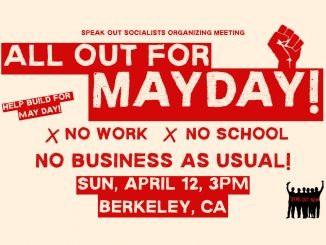
But we do have the ability to stop them. Large protest demonstrations are essential, but by themselves won’t stop the reactionary machine. The working class is not only the large majority of society; we make society run. And we can make it stop. We run the trains, staff the hospitals, drive the trucks, operate the airports, maintain the utilities and banks, run the schools, fill the potholes, staff supermarkets, fix cars, build the furniture and make the clothing and other commodities that capitalists sell for profit. If we stop doing these things, the capitalists’ profits evaporate, and they lose their grip on us. If we withhold our labor, even only some portion of us, the system simply cannot function. If we then combine large strikes with mass protests and mass disobedience, then we can begin to turn the tide.
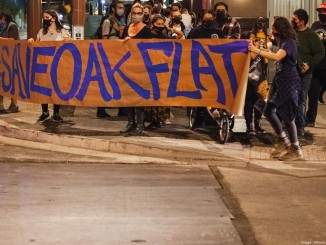
And while ICE and CBP agents on the streets can be intimidating and deadly, they are still a tiny minority, serving the interests of a much tinier wealthy minority. They could not continue to function at all if more of us take to the streets in an organized fashion to challenge them. From Minneapolis to Chicago, Los Angeles to Charlotte, communities have begun to organize themselves to protect their neighbors by patrolling the streets, recording videos of what the masked thugs are doing and sometimes even obstructing them. We need to broaden and expand these brave efforts.
The working-class has in the past shown us how this can be done. In the Russian Revolution of 1917, in the general strike against the Kapp Putsch in 1920 Germany, and with the Minneapolis Teamsters strike in 1934 and others, workers by the tens of thousands and the millions showed what the working class is capable of. They showed that working people, organizing collectively and democratically, can take on and win social struggles, even against the violence of an authoritarian state.
We can do this again. And the people of Minneapolis today are showing us just the beginnings of what will need to be done.
But we have limited time, and the forces on the other side are working overtime. Let’s recognize our possibilities. Then let’s gather our forces and begin to really fight back. If we do, we can not only stop Trump and his thugs; we can open the door to even bigger possibilities.
While it is absolutely necessary to demand the abolition of ICE and CBP, we cannot leave the system in place that depends on them. ICE and CBP are tools of the people in power to maintain their rule over us by terrorizing the immigrant working class as a means to weaken the entire working class. ICE and CBP are tools of the ruling class today just as the whip was a tool of slaveowners during chattel slavery. But to actually abolish institutions like ICE or CBP would be impossible without abolishing capitalism. That must be our ultimate goal.
When we see the working class as an international working class regardless of nationality or citizenship status, then we see that there is an explosive force capable of ending this entire nightmare of a system.
It is time to act.