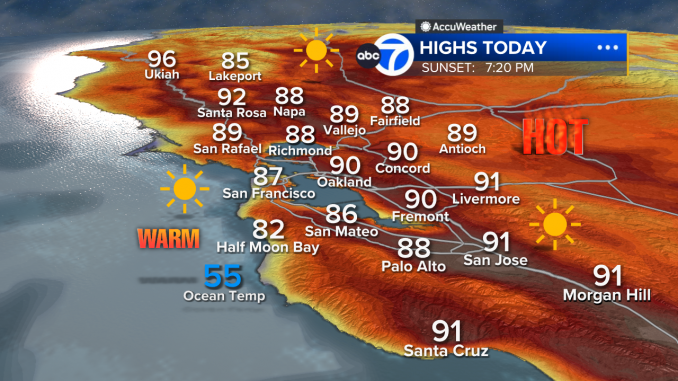
A record-breaking heat wave swept across the Bay Area in March, shattering century-old temperature records. In San Francisco and Oakland, temperatures reached 90 and 88 degrees respectively, breaking previous records set in 1874 and 1970. In total, over a dozen cities saw their hottest March days on record. Meteorologists were stunned, with one noting, “We’ve never issued a heat advisory in March,” highlighting just how unusual the event was, with temperatures soaring a full 30 degrees warmer than the Bay Area’s typically cool spring days.
This extraordinary heat was caused by a heat dome, a high-pressure system that traps warm air like a lid on a pot. While this specific weather pattern is natural, it was amplified by the larger meteorological trend of El Niño, which can amplify more extreme weather patterns in the Pacific Northwest and Northern California. This tends to result in wetter, more intense storms and drier, hotter heat waves and droughts.
However, scientists point to climate change driving the extremities we see in these weather patterns. Experts stated that this March heat wave was so extreme it would have been “virtually impossible” without global warming, with temperatures reaching 20 to 30 degrees Fahrenheit above average in some locations. Scientists also claim that climate change made this heat wave 800 times more likely than if it were to occur naturally without climate change. In particular, the Western U.S. is warming faster than other regions, turning what were once unprecedented events into “recurring features of a warming world.“
Across the nation, the trend is clear. The United States is now breaking 77% more hot weather records than it did in the 1970s. The area affected by extreme weather has doubled in the past 20 years, and the cost of billion-dollar weather disasters is now four times higher than 30 years ago. Scientists have placed this March heat wave in the same category as other ultra-extreme events like the 2021 Pacific Northwest heat wave, Hurricane Helene, and even the costly Palisades and Eaton wildfires of 2025. These are all signs of a planet clearly in distress.
These climate crises will continue to worsen until we fundamentally change our society to be fossil-fuel free. Most people in the world want to have clean, renewable energy, and to live in a sustainable world. That is fundamentally opposed to the interests of the ruling class, whose investments and profits are inextricably tied with the continuation of the fossil fuel industry. It’s our lives versus their profits. It’s up to us!