Despite the dizzying flip-flopping by the Trump-led U.S. government, their war in the Middle East continues and threatens everyone in the world. Negotiations and ceasefires seem to be on again/off again every few days. Israel announced a ceasefire with Lebanon, but continues to drop bombs on Lebanese civilians on the bad faith excuse that they are attacking Hezbollah, the Iranian-backed political party. The blockade of the Strait of Hormuz, sometimes by Iran, sometimes by the U.S., has thrown global oil trade and therefore the world economy into turmoil. The risk of expanding the war is terrifying. We face runaway inflation, economic instability, and cuts to social services and all funding that isn’t directly funding the war efforts, while military spending balloons.
All the while, bombs fall on civilians in Iran, Lebanon, Israel, and other countries in the region. This bloody chaos was set off by Trump and Netanyahu’s “Bomb First” idea of diplomacy. U.S. negotiations with the Iranian government were underway when the deadly attacks on Iran and Lebanon started. This is a strategy of negotiating through fear and showing willingness to “bomb them back to the stone age,” as U.S. leadership said during the Vietnam war and now again in the Iran war. Such atrocities are nothing new for imperialism, whether German imperialism’s genocide in Europe in World War II, the U.S.’s use of nuclear bombs against civilian populations in Japan, or the U.S.-supported Zionist genocide against Palestine, to mention just a few examples.
There are thousands of dead and wounded because the U.S. and Israeli governments wanted to bomb first and negotiate from a stronger position. The result is not just the dead and wounded so far; it will be the longer-term results of bombing healthcare facilities, schools, apartment buildings, oil reserves, and other essential ecosystems and infrastructure for life that will take years to rebuild.
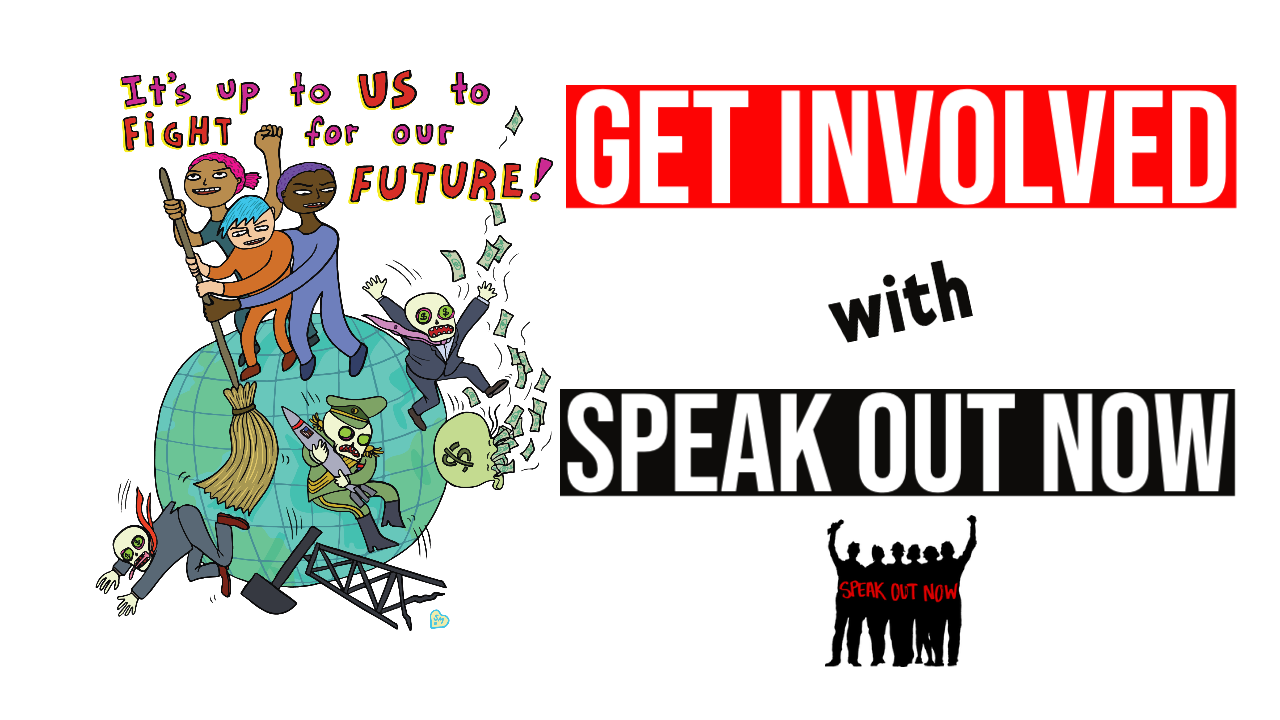
One outcome is not in doubt. The global oil barons are making a killing. The 100 leading petro-companies in the world collectively made extra profits of $30 million per hour during the first month of the war. In March alone, they made $23 billion in “extra” profits. These companies, led by the likes of ExxonMobil and Saudi Aramco, are using the war to steal billions from the pockets of working people around the world. These same companies insist that global heating is not real or at least that we will survive it well. But the science and our lived experience clearly show that this is a lie. We face climate catastrophe around the world—increasingly violent storms, rising sea levels, heatwaves, wildfires, droughts, species extinctions, and more—certainly ending life as we know it, and probably worse, if we do nothing to counter it.
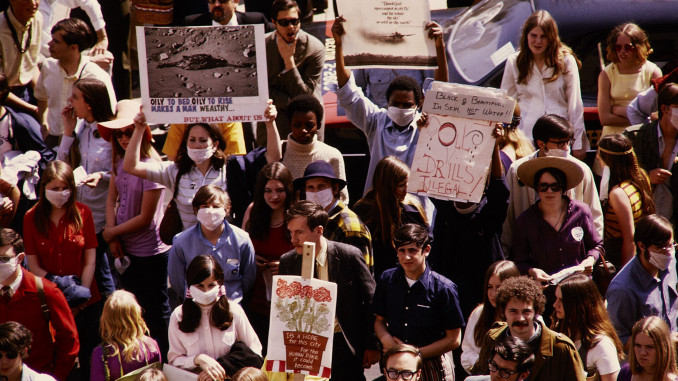
April 22 is Earth Day, an annual global event started in 1970 calling attention to pollution of the environment and more recently the deepening climate catastrophe. On this year’s Earth Day, we must address, among other atrocities, the war that is pushing oil profits sky-high, while further destroying our suffering planet.
In the face of the current war and the growing global climate devastation, it’s not unusual for people to feel that the situation is hopeless. But, there is good reason to be hopeful. Many people in the U.S. and around the world know that imperialist wars and the dominance of fossil fuel billionaires are not in the interest of the vast majority. Together, we can fight this feeling of hopelessness and set a new course for ourselves and for the planet.
We need to talk to each other at work, at school, at the supermarket, while riding on mass transit, and at community events. We can talk about how so many communities in the U.S. have organized successfully against ICE and the thousands of high school students who walked out of classes to protest ICE. We can talk about the millions of people who have participated in No Kings demonstrations. We can talk about the thousands of meatpacking workers in Colorado who went on strike in March against JBS, the biggest meatpacking company in the world, to fight for better pay, working conditions, and health care—and extended their strike (against the desires of union officials) to force the company back into negotiations. And we can talk about what we need to do next to fight the billionaire class and their politicians.
Indeed, there is something happening here. And that is reason for hope. In the short term, Earth Day and May Day can be rallying points for action. We can—and have to—get rid of the billionaire class that is killing us. But to get to where we can do that, we must organize now.