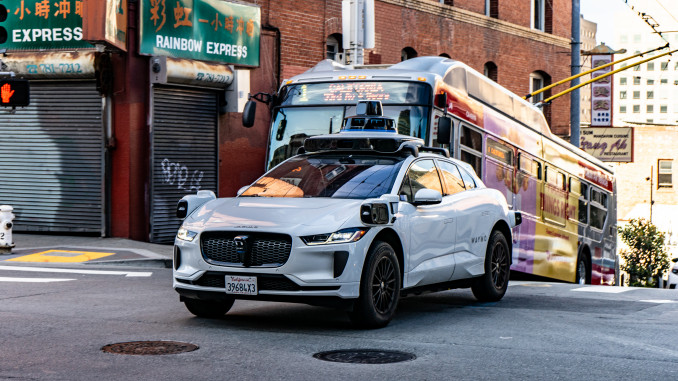
During a U.S. Senate hearing on February 4, Waymo disclosed that it relies on remote workers in the Philippines to assist its self-driving vehicles with navigation. When a Waymo car encounters a complex or ambiguous situation on the road, it can reach out to a human remote operator for guidance on interpreting its surrounding environment.
This news emerged amidst heightened public concern over Waymo’s safety record. In January, a Waymo vehicle struck a child near a Santa Monica elementary school during morning drop-off, sparking an investigation by the National Highway Traffic Safety Administration. Months earlier, one of the company’s robotaxis ran over and killed “Kitkat,” a well-known neighborhood cat in San Francisco’s Mission District.
These incidents intensified public outcry over the safety and reliability of AI, while also fueling broader anger about job displacement and the social costs of automation. Some community members, workers, and unions, including Teamsters California, have called for stricter regulation and even the suspension of Waymo’s operations in the state.
Beyond immediate safety concerns, the revelation complicates the dominant narrative of autonomous, AI technology. Rather than functioning independently, these systems rely on a hidden stratum of human labor, oversight, and decision-making. This invisible work demonstrates how “advanced” AI does not entirely eliminate human labor so much as obscure and exploit it. By reducing labor costs through job cuts while shifting essential tasks to lower-paid workers out of public view, AI under capitalism harms and divides working people everywhere while enriching the billionaire class.