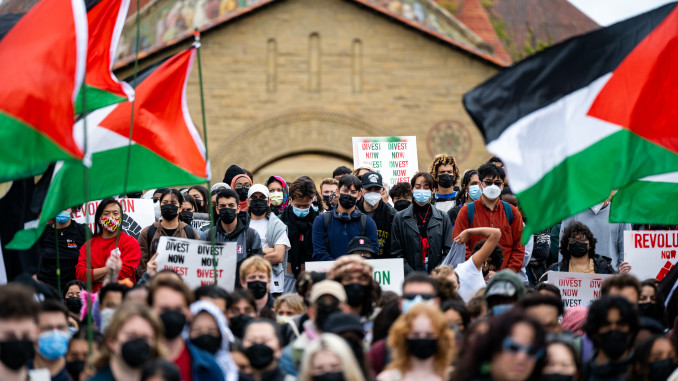
The trial against Stanford students who participated in a pro-Palestine protest in June 2024 began earlier this year. Five students were charged with felony conspiracy to trespass and vandalism for occupying the office of the university’s president. This case stood out not just for the severity of the charges, but for the disparity between the alleged damage and criminal prosecution. Many were also concerned with Santa Clara County District Attorney Jeff Rosen’s potential political bias, given his support for the state of Israel.
However, a mistrial was declared. The mistrial was the result of a deadlocked jury, which could not reach a unanimous verdict. This has raised new questions about the strength of the case against the students and whether the prosecution has a strong-enough case against them. Despite some jurors believing the students were guilty, others found the case insufficiently convincing to convict, leading the judge to declare a mistrial after several days of deliberation.
A mistrial occurs when a jury cannot reach a unanimous verdict, which is required in criminal cases to ensure a fair trial. In cases like this, where the jury is split, the judge typically has two options: either declare a mistrial, as happened here, or declare a hung jury. Following a mistrial, the prosecution can choose to retry the case with the option for a new jury, drop charges, or seek a plea agreement. Moving forward with a retrial would give the prosecution another opportunity to present the case. We have not received information on whether a retrial will take place, so the legal battle against the Stanford students may still be far from over.
Beyond the immediate legal implications, the trial and its aftermath are seen as part of a broader crackdown on free speech and activism, particularly on university campuses. The prosecution of the Stanford students could set a dangerous precedent for the future of student activism. By pursuing aggressive legal action against student protestors, there is concern that universities, in partnership with prosecutors, could use the legal system to intimidate and silence student voices, undermining the very principles of free expression and activism that universities are supposed to protect.